CRM System: GoSwift
A B2B platform for booking border crossing time slots. Logistics companies book slots for their vehicles, while admins manage the full system on the other side. I redesigned the full product: the booking flow and the admin panel.
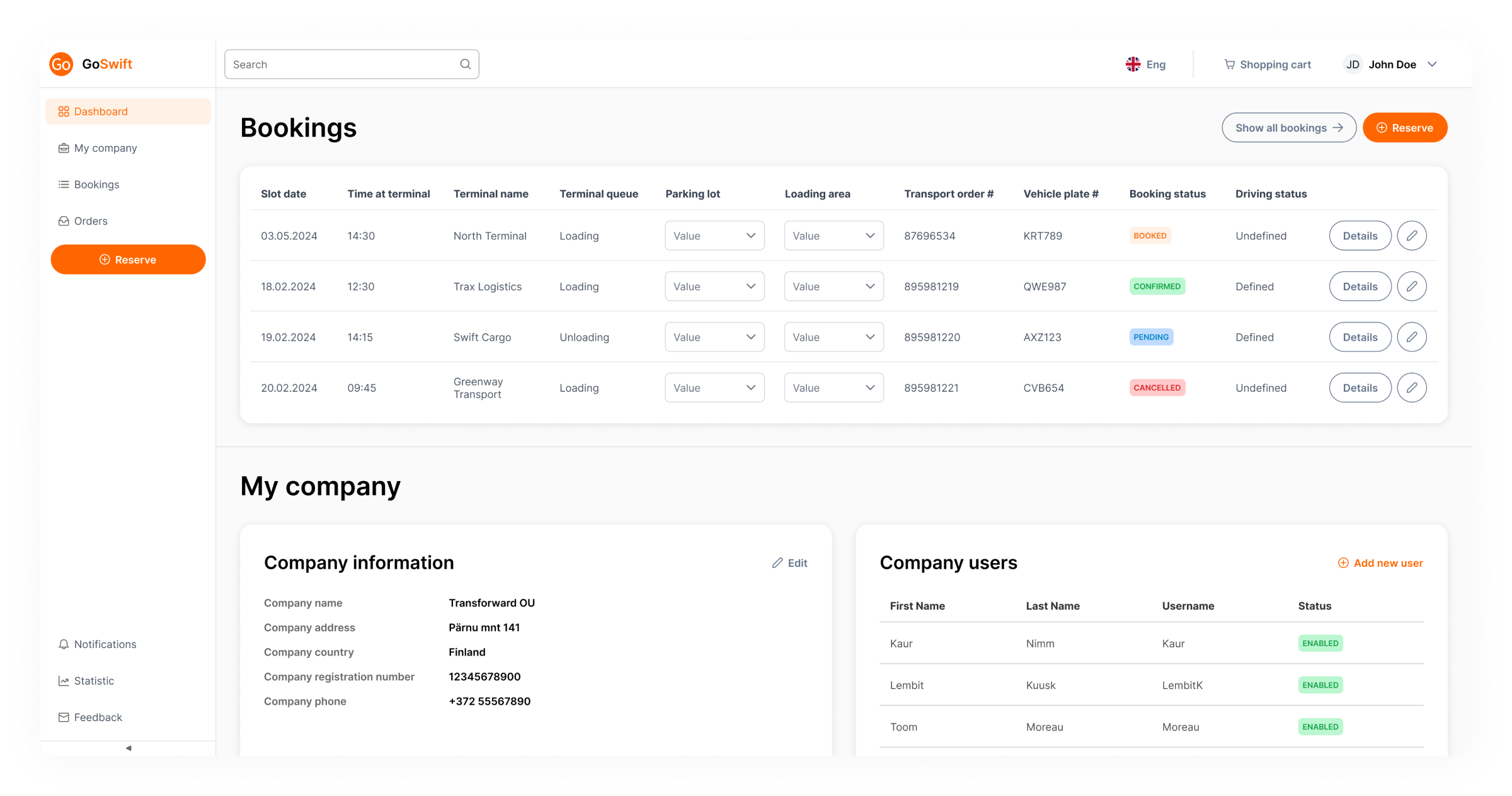
GoSwift is a B2B platform for booking border crossing time slots. Logistics companies book slots for their vehicles through one side of the product, while admins manage the full system on the other.
Both sides were built without a design baseline, making the product inconsistent and hard to maintain.
Redesign the full platform: fix visual inconsistency, improve the booking flow for logistics companies, and make the admin panel practical to use.
- Audited both user and admin sides to map inconsistencies and usability issues.
- Set up PrimeNG as the component library and customized the theme with Token Studio.
- Redesigned the booking flow as a multi-step process with focused stages.
- Rebuilt admin slot management with a structured schedule system and reusable templates.
Interface Unification
The UI was built by developers in different styles. No visual consistency, components used incorrectly, text blocks instead of tables. Supporting the interface was expensive for both design and dev.
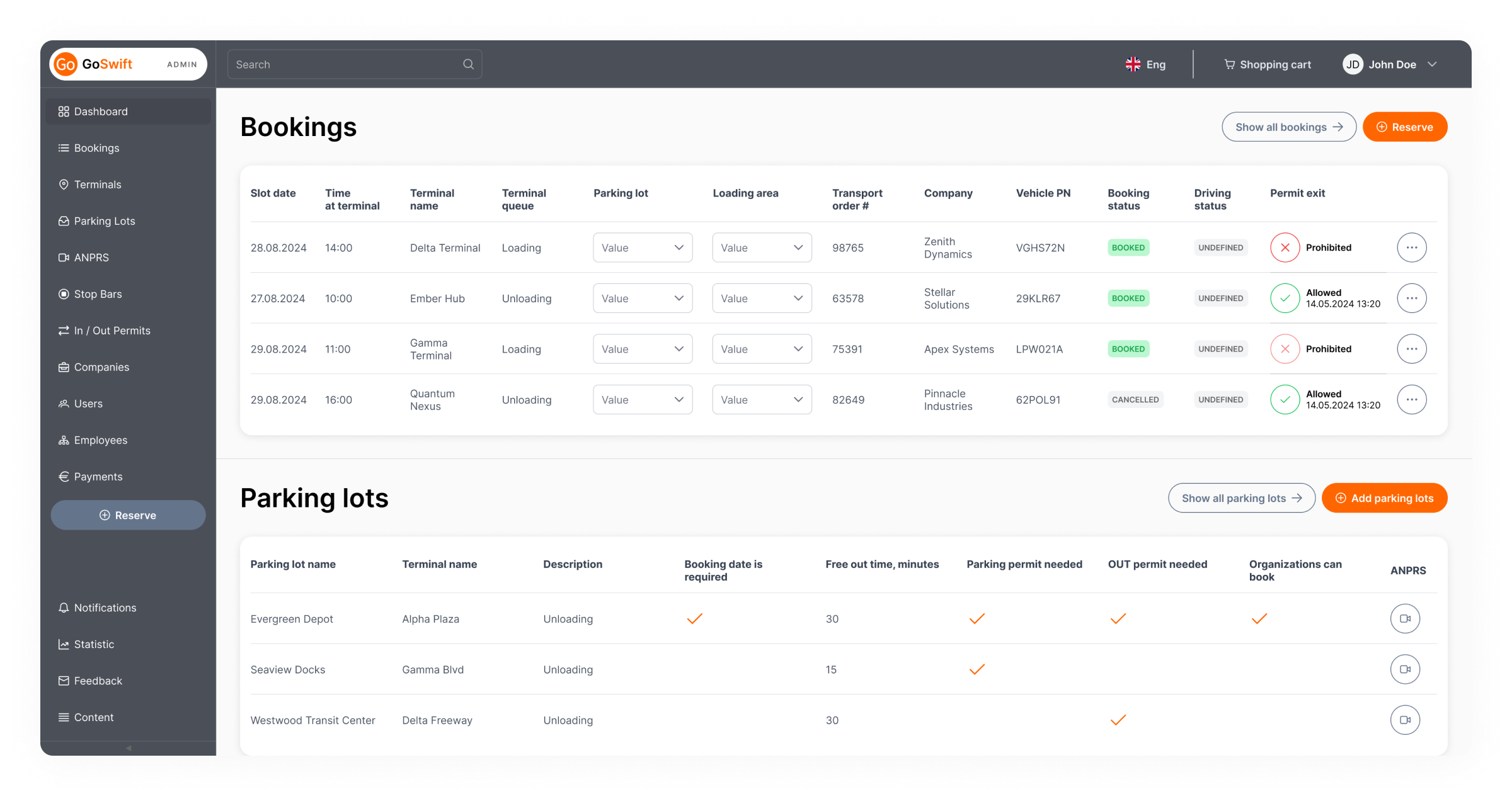
Moved to a framework-first approach with PrimeNG (Angular). Customized the theme through design tokens with Token Studio. Replaced text blocks with proper tables. User and admin parts now share the same visual language.
Interface became consistent and maintainable. Developers can build new screens within the library without involving a designer.
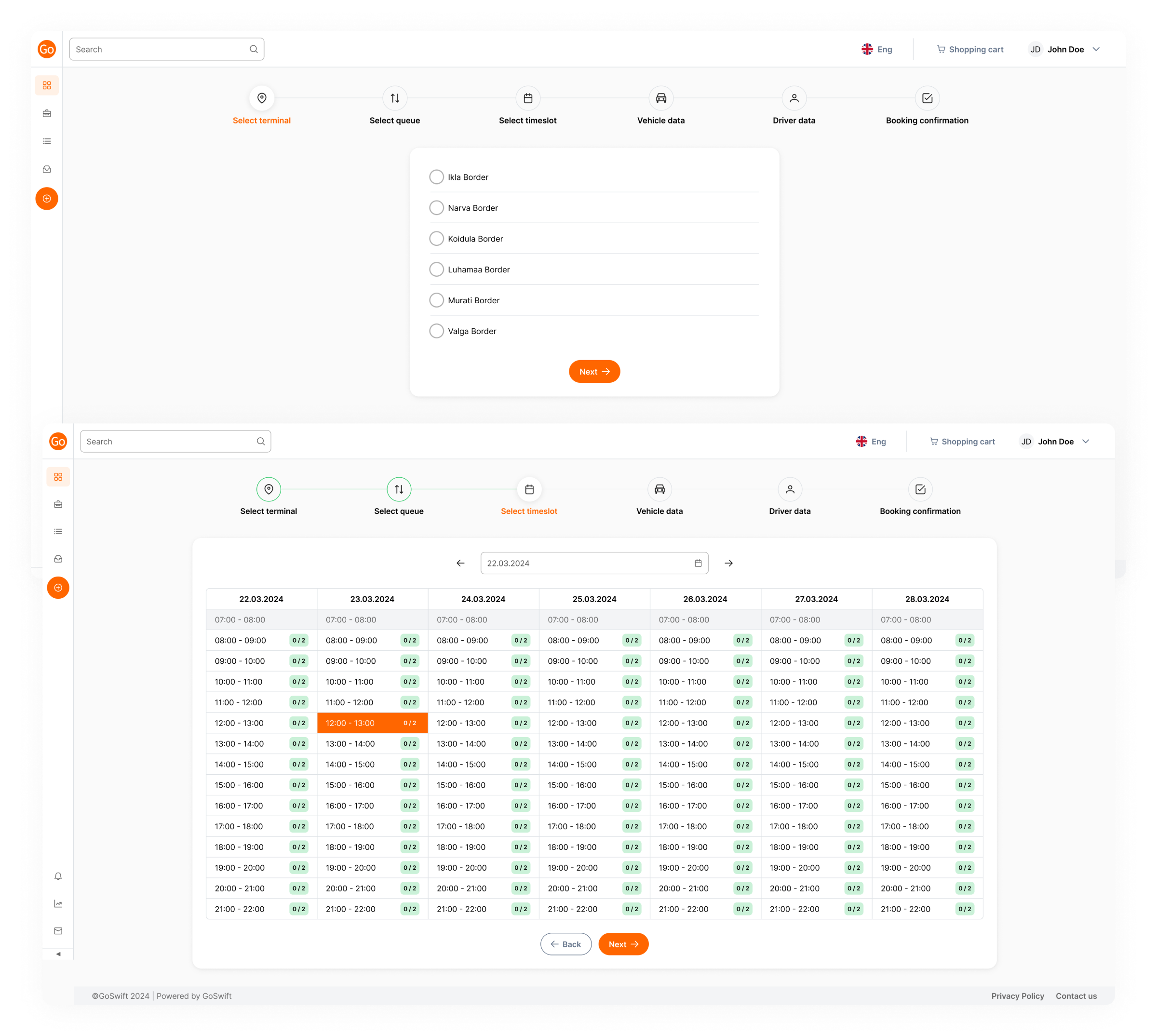
Booking Flow Redesign
Too much data to fill in at once. Users did not understand where the process started, where it ended, or what they needed to fill in.
Split the information into several steps. More clicks, but a faster process: data at each step was cleaner and easier to handle.
Users moved through the booking with less confusion. Each step had a clear focus, which reduced errors and incomplete submissions.
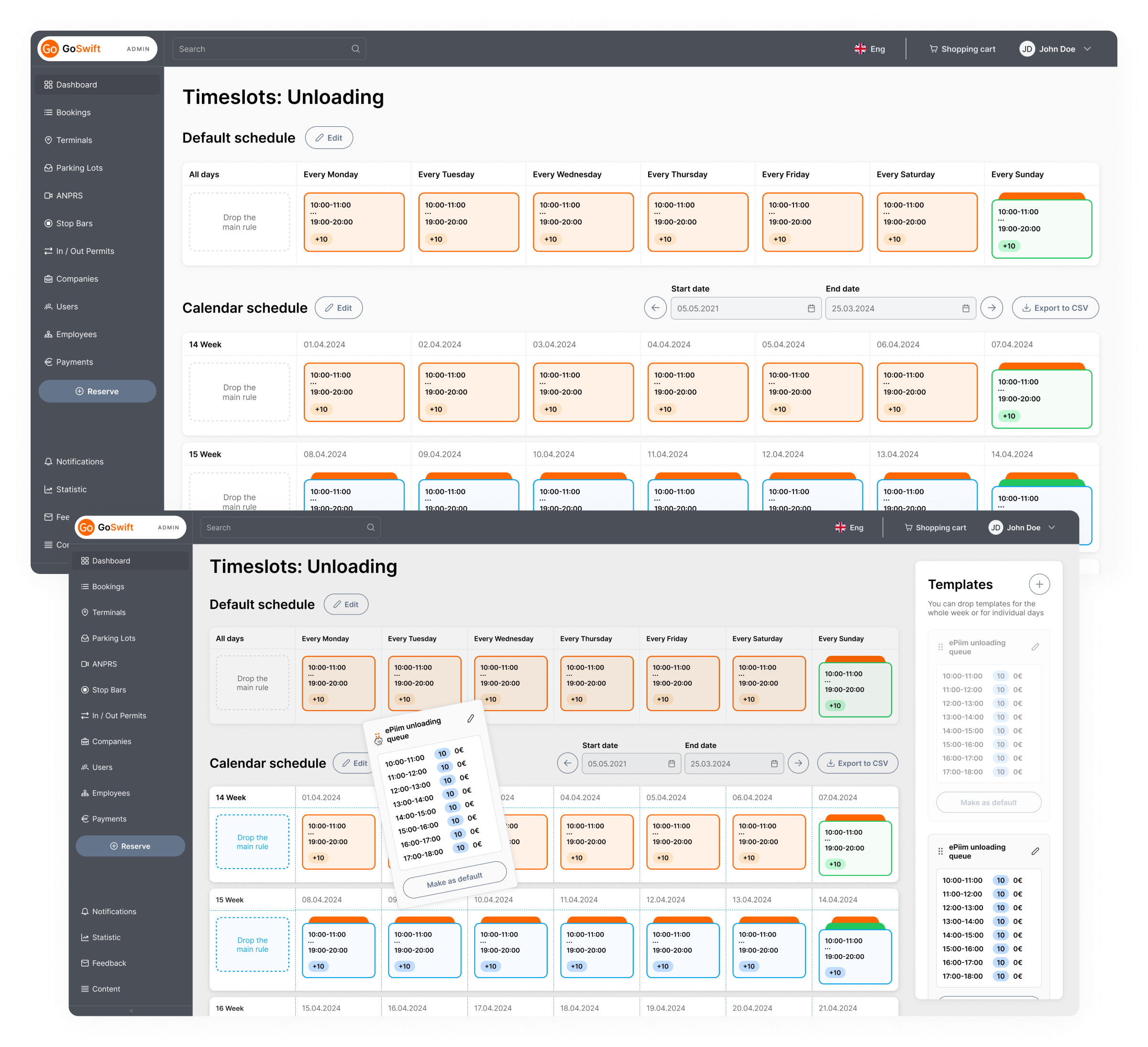
Admin Slot Management
The admin interface for managing timeslots had no clear structure and was difficult to use.
Redesigned with two schedule levels: a default weekly schedule and a calendar view for specific dates. Added a templates panel so admins can apply predefined configurations to any day or week.
Admins set up and adjust schedules faster. The template system removed repetitive manual work.
Both the booking flow and the admin panel went from inconsistent and hard to maintain to structured, scalable interfaces. The dev team can now extend the product independently.
The most important fix was the framework. Once PrimeNG and the token system were in place, every other decision became much easier to make and much faster to ship.