ERP Platform for an Energy Company
A comprehensive ERP system for traders and accountants covering the full cycle of fuel purchase, sale, and delivery for cargo vessels.
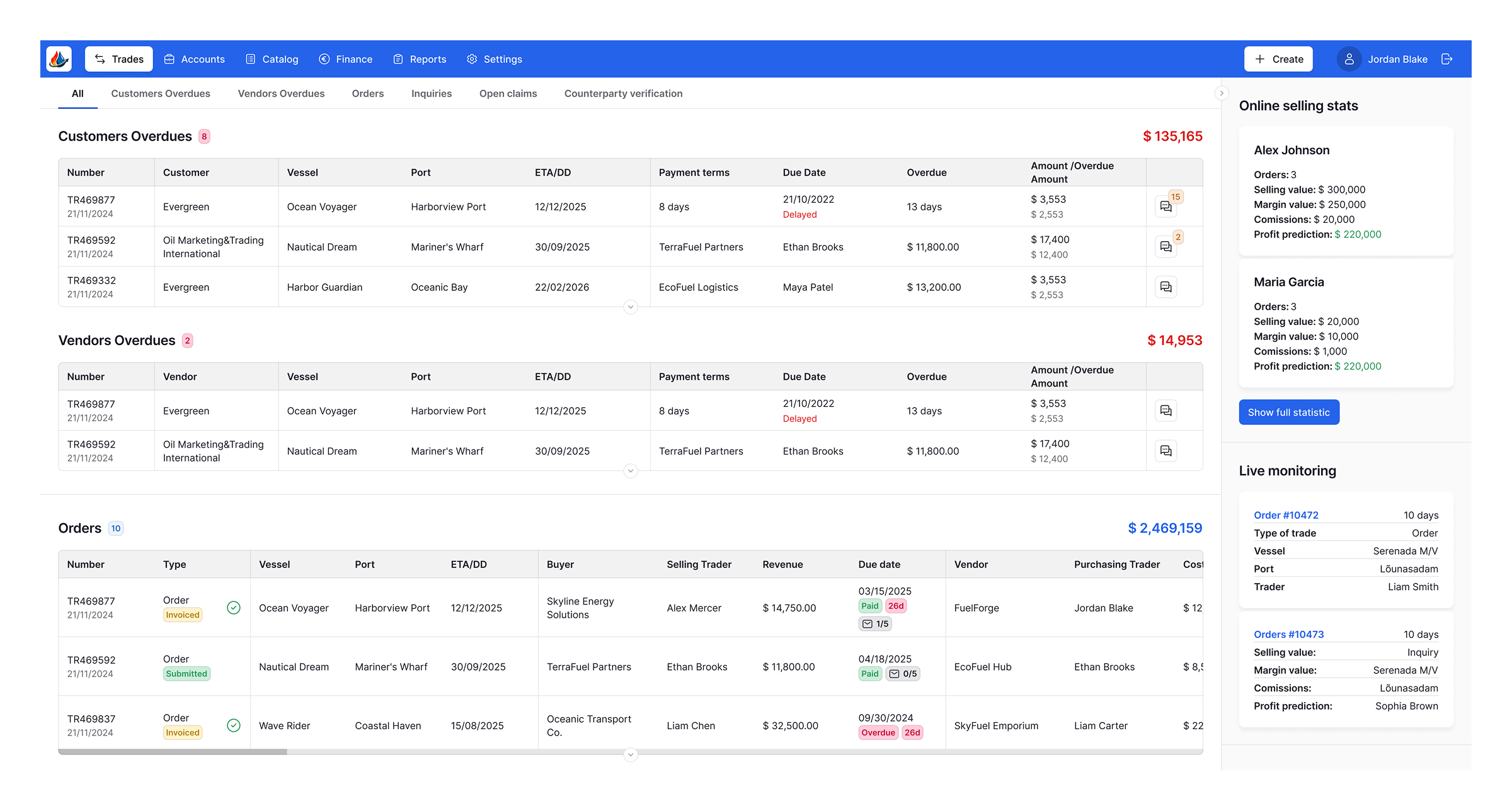
The company is a major player in the fuel trading market. Dozens of deals are closed every day across multiple departments, yet all the work relied on Excel spreadsheets and an internal tool used in parallel.
The result: constant miscommunication between departments, missed details, and errors that were nearly impossible to trace.
Replace the fragmented tools with a single ERP system ensuring effective communication across 8 departments and offices in 6 countries.
- Mapped key flows through working sessions, diving deep into business processes and each participant's role.
- Held separate calls with different departments to identify their critical needs.
- Designed, prototyped, and confirmed solutions in short, parallel cycles.
- After the MVP was built, developed a full design system to establish consistency.
Streamlining cross-department communication
All trade communication happened in Excel and chats. After creating a trade, it had to go through the Credit Risk and Sanctions Check departments, then return to the trader with comments.
I designed a structured trade submission flow built into the product. A trade is sent with one click, passes through all review stages, and returns with a status or inline comments. Every step is visible to all participants.
Manual handoffs through chat were eliminated. The review cycle became faster, and errors are now tracked within the system.
Trade list page and creation form
Traders were using templated Excel files that were constantly being edited, causing confusion. Attempts to use a system built on standard tables were equally unsuccessful.
A new form was designed, split into clear sections: "Main Information" and "Product Information". Visual grouping and clear element boundaries help users navigate the data quickly.
Filling in trade details became faster and reviewing them across departments became more convenient. The structured layout reduced the number of incomplete submissions.
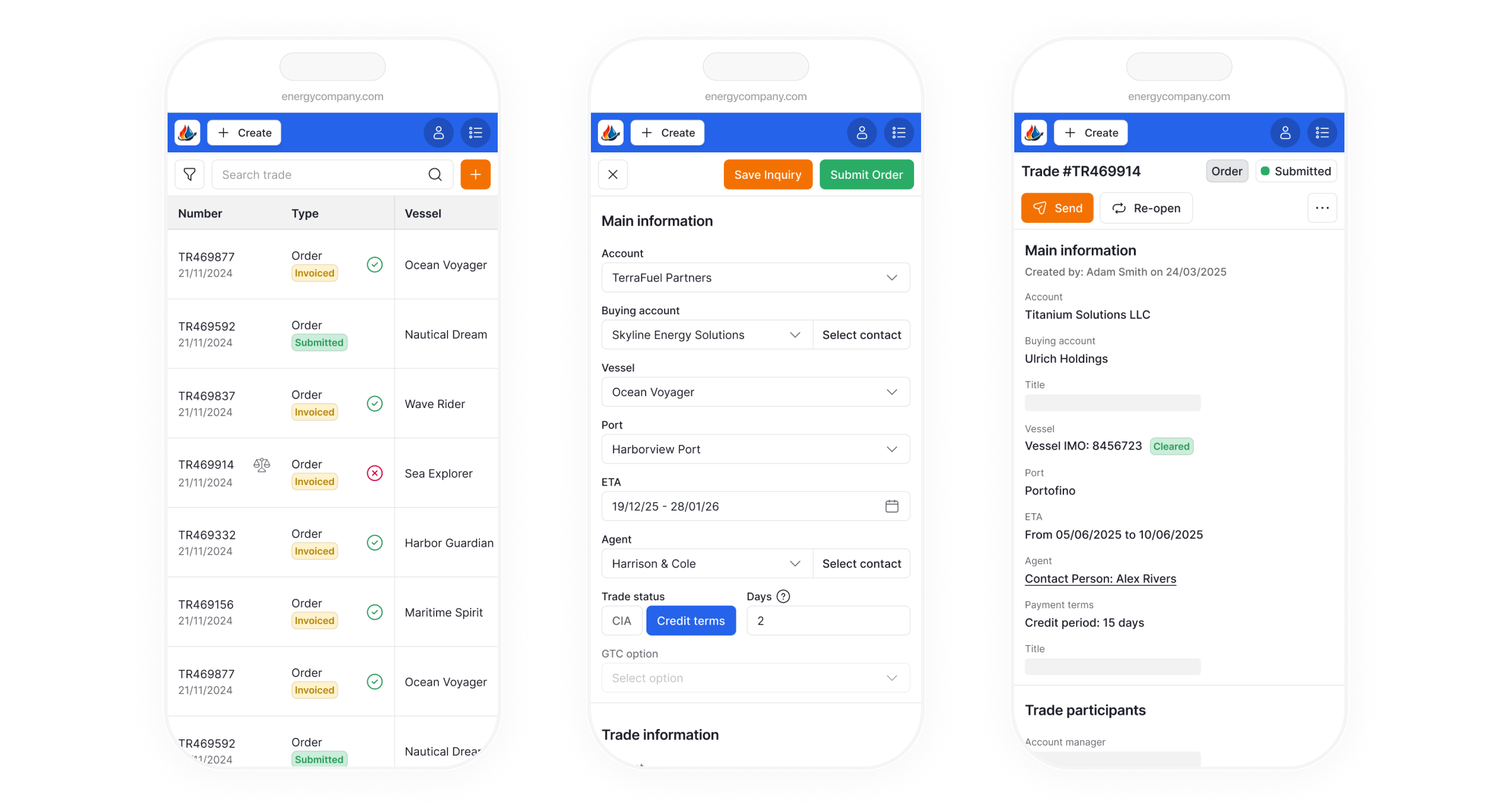
Mobile version for working away from the desk
Traders frequently work at conferences and events where they need to act quickly. The system was desktop-only due to the large volume of data involved.
Since users needed full functionality, I implemented responsive tables with scroll on both axes and well-structured forms. The flexibility of the design system made this fast to roll out.
Traders can now start deals from anywhere. Drafts created on mobile appear instantly on desktop.
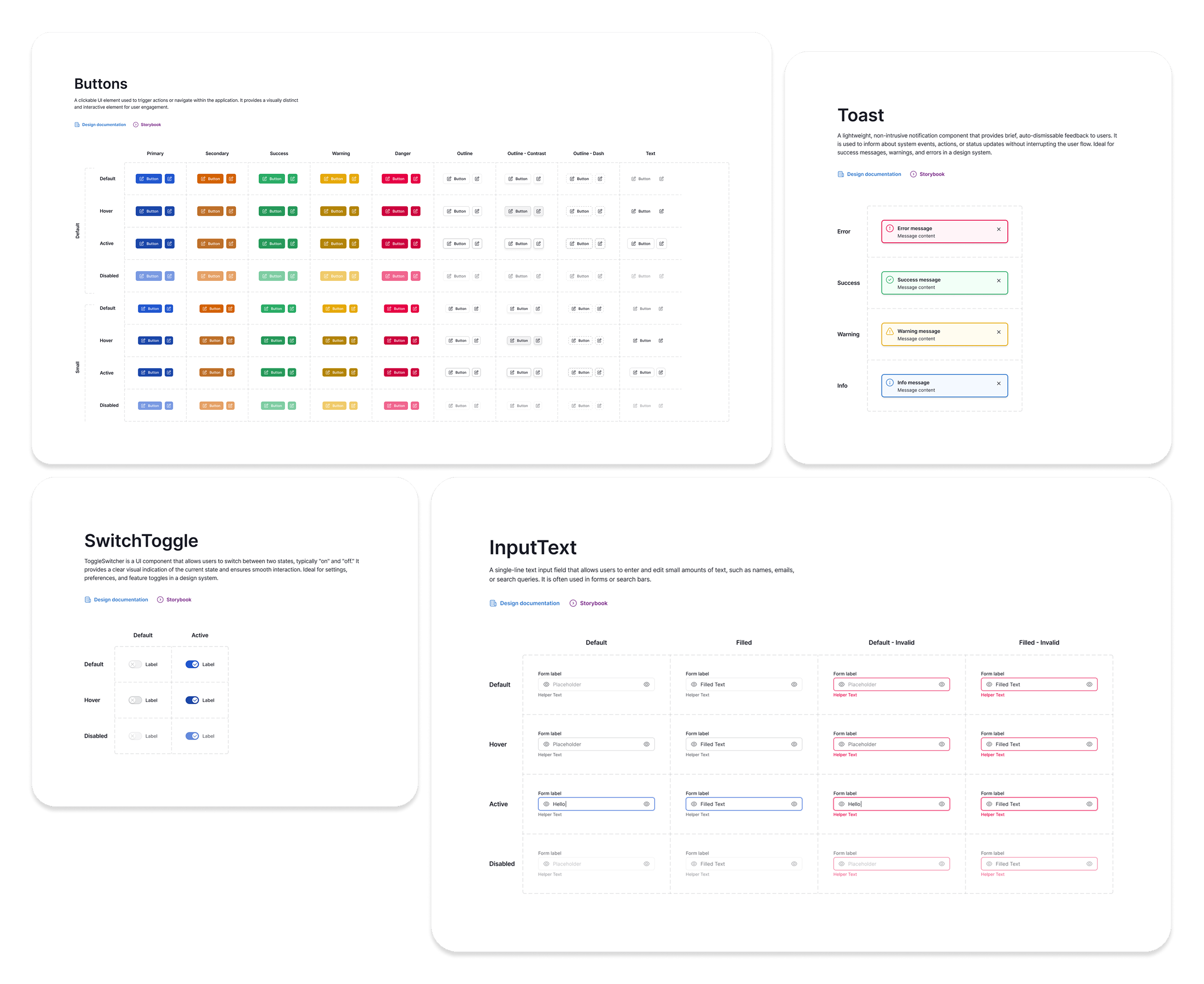
It was not part of the original plan, but became a necessity given the pace of the project. We paused, laid the foundation, and the rest of the project moved faster because of it.
- 500+ components, variants, and variables built on atomic design principles.
- Variables structured for reuse and future SaaS scaling.
- Covers everything from buttons and inputs to complex tables, filters, and modals.
All traders fully moved from Excel to the new system. The trade lead noted a threefold improvement in work speed. Errors were minimised, and cross-department communication became transparent and traceable.
This project proved that a quality product can emerge even from unclear conditions. The key is staying in close contact with people who understand the business and moving fast enough to learn from every stage you ship.